
Understanding how to become an aircraft parts dealer starts with one regulatory fact: neither the FAA nor EASA issues an operating license to parts brokers or distributors. Instead, commercial buyers require third-party quality accreditation such as ASA-100 or AS9120, aviation product liability insurance, segregated warehousing, and strict document traceability.
Anyone can register a trading company and list surplus hardware, yet airlines, charter operators, and maintenance organizations rarely buy from unvetted vendors. Every installed component puts an operator's operating certificate on the line. Building a credible dealership means designing your warehouse, quality manual, and supplier controls to pass customer audits before your first quote goes out.
Key Takeaways
- Civil aviation authorities such as the FAA and EASA do not directly certificate pure parts brokers or stocking distributors.
- Commercial airlines and MROs require voluntary quality accreditation like ASA-100 or AS9120 before granting Approved Vendor List status.
- Compliant aviation warehouses physically separate receiving inspection, climate-monitored stockrooms, shipping stations, and locked quarantine cages.
- Aviation product liability insurance and export control screening are commercial prerequisites before shipping flight hardware.
Do You Need an FAA or EASA License to Sell Aircraft Parts?
New entrants frequently waste weeks searching for a government "aviation parts dealer license" that does not exist. In the United States, the FAA regulates design and production under 14 CFR Part 21, maintenance under Part 43 and Part 145, and flight operations under Parts 91, 121, and 135. Across Europe, EASA applies parallel approvals under Part 21, Part-145, and Part-CAMO, while authorities such as Transport Canada and the UK CAA follow the same boundary. If your business buys, stores, and resells parts without manufacturing articles or signing maintenance releases, civil aviation authorities do not issue you an air agency certificate.
That regulatory boundary never shields a careless seller. Under aviation rules, the installer carries final legal responsibility for verifying that a part conforms to approved data and is safe for operation, so airlines push strict audit requirements upstream onto every vendor. At the same time, sellers face severe civil and criminal liability—including prosecution under 18 U.S.C. § 38 in the United States—if they alter release tags, conceal accident history, or introduce counterfeit parts into commerce.
Which Accreditations Put You on Airline Approved Vendor Lists?
Commercial procurement teams rely on voluntary industry oversight to screen aftermarket suppliers. The foundational benchmark in North America and global airline fleets is FAA Advisory Circular AC 00-56, the Voluntary Industry Distributor Accreditation Program. Participating distributors pass an independent third-party audit against an accepted quality standard and appear in the public AC 00-56 registry maintained by the Aviation Suppliers Association , giving airline quality managers immediate proof of compliant material controls.
Two quality standards dominate commercial and defense aviation distribution. ASA-100 was built specifically around aftermarket airline traceability, receiving inspection, and FAA AC 00-56 alignment. Meanwhile, AS9120 and AS9100 certifications build upon ISO 9001 and place your company inside the global IAQG OASIS directory required by aerospace manufacturers and defense contractors. Both standards require written quality manuals, staff training logs, calibrated inspection tools, shelf-life tracking, and batch-splitting procedures, plus several months of real operational records before your registrar completes certification.
| Requirement | Who Expects It | Common Standard | Core Function |
|---|---|---|---|
| Quality System | Airlines, MROs, OEMs | ASA-100 or AS9120 | Audits receiving, storage, and trace records |
| Voluntary Registry | US and global carriers | FAA AC 00-56 | Public listing of accredited distributors |
| Liability Insurance | Airlines and lessors | Aviation Products Policy | Covers third-party hull and bodily injury |
| Hazmat Training | Freight carriers, authorities | IATA DGR / 49 CFR | Legal shipping of batteries, squibs, chemicals |
| Export Screening | National customs agencies | EAR / ITAR / EU Dual-Use | Prevents unauthorized cross-border transfers |
Step-by-Step Setup: How to Become an Aircraft Parts Dealer
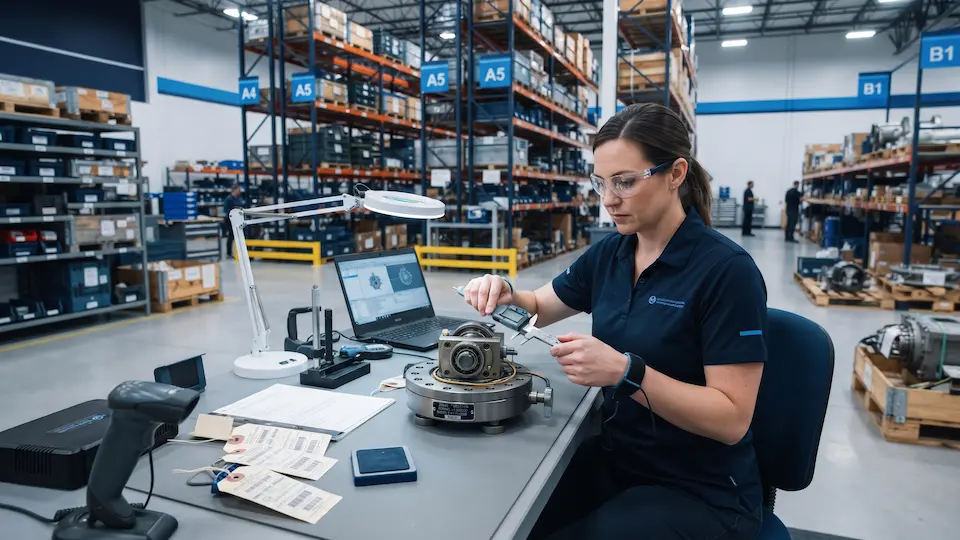
Start by forming a dedicated legal entity, obtaining wholesale tax resale certificates, and binding aviation products and completed operations liability insurance through a specialist aviation broker. Standard commercial general liability policies exclude flight hardware, and airline vendor questionnaires routinely require high per-occurrence coverage limits before issuing a supplier code. Next, lay out a commercial warehouse with four segregated zones: a well-lit receiving inspection bench, an access-controlled stockroom with temperature and humidity data loggers plus electrostatic discharge protection for avionics, a locked quarantine cage for discrepant material, and a packing area built around ATA Spec 300 protection practices.
Spreadsheets fail the moment an auditor asks you to trace split fastener lots or run a recall check by batch number. Implement aviation-specific ERP software that links scanned PDFs of FAA 8130-3 and EASA Form 1 certification directly to serial numbers, cure dates, and purchase orders. Once your inventory system is structured, connect stock feeds to electronic B2B platforms where procurement buyers look when deciding where to buy parts online for scheduled checks and urgent AOG events.
Sourcing Initial Inventory and Vetting Traceability
Profitable startups specialize in a focused technical niche—such as narrowbody pneumatic valves, regional turboprop wheels and brakes, or business jet cockpit displays—instead of tying up cash in random surplus lots that sit untouched for years. Studying how airlines buy and lease aircraft helps dealers spot fleet phase-outs, lease redelivery waves, and airframe teardowns early. Many newcomers also negotiate consignment agreements to store and market excess airline or MRO inventory for a sales commission, building marketplace presence without heavy upfront debt.
Every purchase decision lives or dies at your receiving bench. Train inspectors to verify required documents to sell used aircraft parts, match physical data plates against release paperwork, and classify stock accurately across standard aircraft part conditions. Clean provenance and realistic repair-shop turnaround times directly determine how aircraft parts are priced when an operator needs a replacement unit on the ramp overnight.
Common Compliance Mistakes That Block New Dealers
Three operational lapses trigger most audit findings at young dealerships. First, weak shelf-life tracking lets elastomeric O-rings, sealants, and adhesives expire inside serviceable bins rather than moving automatically to quarantine. Second, splitting bulk hardware bags without attaching certified sub-lot copies of the original manufacturer certification severs traceability. Third, accepting self-written broker letters instead of authentic operator Non-Incident Statements leaves expensive rotables unusable for major carriers.
Cross-border compliance blind spots cause equally expensive shipment holds. Because aerospace hardware moves internationally every day, selling military-derived components domestically or shipping dual-use civil electronics abroad triggers strict government licensing rules. Build clear screening workflows for importing and exporting aircraft parts before quoting foreign buyers so customs seizures or sanctioned-party errors never derail your business.
Frequently Asked Questions
Can you broker aircraft parts from a home office?
Yes, an independent broker can arrange back-to-back drop shipments from an office without handling physical hardware, provided accredited distributors or repair stations manage storage, inspection, and shipping. However, earning your own ASA-100 or AS9120 warehouse accreditation requires a dedicated commercial facility with restricted access, environmental monitoring, and locked quarantine segregation.
Does ASA-100 or AS9120 let a distributor sign an FAA Form 8130-3?
No. Distributor accreditation certifies your quality management system for receiving, storing, and tracing aviation materials, not maintenance or manufacturing authority. Only civil aviation authorities, authorized designees, production approval holders for new articles, and appropriately rated Part 145 repair stations performing maintenance can issue an FAA Form 8130-3 or EASA Form 1.
How long does aviation distributor accreditation take?
Completing quality manual drafting, staff training, documented operational history, internal audits, and the external registrar assessment takes time—often several months, depending on readiness. Actual timelines depend on warehouse preparation and how quickly your team generates clean receiving, calibration, and quarantine records for the auditor to sample during review.