
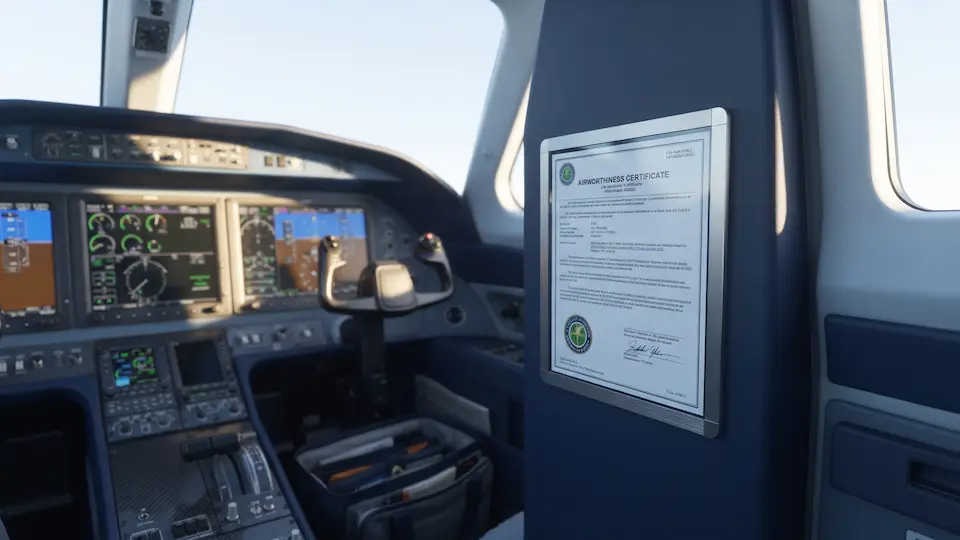
An airworthiness certificate is the official document issued by a civil aviation authority that authorizes a civil aircraft to operate in flight. Understanding the difference between Standard, Special, and Export airworthiness certificates is critical for buyers, sellers, and operators, because operating outside an aircraft's certificated category violates aviation law and can affect insurance coverage.
When evaluating a prospective aircraft purchase or verifying cross-border transfer paperwork, examining the airworthiness certificate is always the first step. A standard form permits routine commercial and private transport, whereas special categories impose strict operating limitations that restrict passenger carriage, route planning, and lease financing.
Key Takeaways
- Standard airworthiness certificates are issued for type-certificated aircraft operating in normal, utility, acrobatic, commuter, or transport categories.
- Special airworthiness certificates cover experimental, light-sport, restricted, primary, and provisional categories with specific operating limitations.
- Export certificates of airworthiness verify that a used aircraft meets importing country requirements before crossing international borders.
- Airworthiness certificates do not expire with calendar time, provided the aircraft maintains continuous airworthiness through required maintenance and AD compliance.
Standard Airworthiness Certificates (FAA Form 8100-2)
Under FAA regulations (14 CFR 21.175) and corresponding EASA rules, a Standard Airworthiness Certificate (printed on traditional paper as FAA Form 8100-2) is issued for aircraft built in accordance with an approved Type Certificate. These aircraft fall into established operational categories including Normal, Utility, Acrobatic, Commuter, and Transport.
A standard certificate carries no calendar expiration date, remaining valid indefinitely as long as the aircraft is maintained in an airworthy condition, undergoes required annual or 100-hour inspections, and complies with all applicable airworthiness directives vs service bulletins. Under 14 CFR 91.203, this certificate must be displayed in the cabin or cockpit entrance so it remains legible to passengers and crew. Note that standard certificates do not cross international registers automatically; importing an aircraft requires a specialized transition process.
| Certificate Class | Typical Aircraft Types | Key Operating Rules & Limitations |
|---|---|---|
| Standard (Form 8100-2) | Airliners, corporate jets, general aviation trainers | Routine passenger and cargo operations under Parts 91, 135, or 121 |
| Special - Experimental | Amateur-built kit planes, research, R&D | Prohibited from carrying passengers for hire; specific flight test rules |
| Special - Light-Sport | Factory-built LSA, recreational trainers | Day-VFR/night limits depending on equipment; sport pilot certification |
| Special - Restricted | Agricultural sprayers, firefighting tankers | Limited to specialized industrial purposes; commercial passengers prohibited |
| Export Certificate | Aircraft transferring across international borders | Validates conformity prior to re-registration in destination country |
Special Airworthiness Certificates and Operating Limitations
When an aircraft departs from traditional type-design standards—such as homebuilt experimental kits, vintage military warbirds, agricultural sprayers, or light-sport aircraft—it receives a Special Airworthiness Certificate (FAA Form 8130-7). These certificates specify exact operational boundaries that pilots and operators must obey.
For example, a Restricted Category certificate permits operating surplus military aircraft or specialized agricultural planes, but explicitly prohibits carrying passengers or property for compensation or hire. Experimental aircraft are bound by tailored operating limitations issued by the aviation authority, often requiring flight testing over unpopulated areas and prohibiting commercial carriage. Buyers reviewing a used aircraft must inspect both the special airworthiness certificate and its attached operating limitations document to verify the plane can legally perform its intended mission.
Export Certificates of Airworthiness and Cross-Border Transfers
When a buyer purchases an aircraft located in one country and registers it in another, the exporting authority issues an Export Certificate of Airworthiness (such as FAA Form 8130-4 or EASA equivalent). This document certifies that the aircraft has been examined, meets its type design, complies with agreed-upon import requirements, and is in a condition for safe operation.
Managing an international transfer requires coordinating export airworthiness approvals alongside customs clearances, de-registration from the prior national registry, and managing importing and exporting aircraft parts. Missing export documentation will stall re-registration indefinitely, grounding the asset.
Maintaining Airworthiness: Logs, Inspections, and Modifications
An airworthiness certificate is only as valid as the maintenance records supporting it. If an aircraft misses a mandatory inspection, flies past an Airworthiness Directive deadline, or undergoes an unapproved structural alteration without a Major Repair and Alteration FAA Form 337, its airworthiness certificate effectively lapses until the discrepancy is corrected by a certificated Part 145 repair station or A&P mechanic.
When evaluating a potential acquisition using a structured pre-purchase inspection guide, verify that the physical data plate on the aircraft fuselage matches the serial number written on the airworthiness certificate, and ensure all Supplemental Type Certificates installed over the aircraft's lifespan are properly documented in the permanent logbooks.
Frequently Asked Questions
Does a standard airworthiness certificate expire?
No. Under FAA regulations (14 CFR 21.181) and EASA rules, a standard airworthiness certificate does not expire with calendar time. It remains valid indefinitely as long as the aircraft is maintained in accordance with applicable airworthiness requirements, routine inspections, and mandatory ADs.
Can an experimental aircraft be flown for commercial hire?
Generally, no. Special airworthiness certificates in the experimental category prohibit carrying passengers or property for compensation or hire, with very narrow exceptions granted for flight instruction in amateur-built aircraft under specific regulatory waivers or commercial research testing.
What is the purpose of an Export Certificate of Airworthiness?
An Export Certificate of Airworthiness confirms to the civil aviation authority of the importing country that an aircraft or major component conforms to approved design data and is in a condition for safe operation at the time of export, facilitating re-registration abroad.