
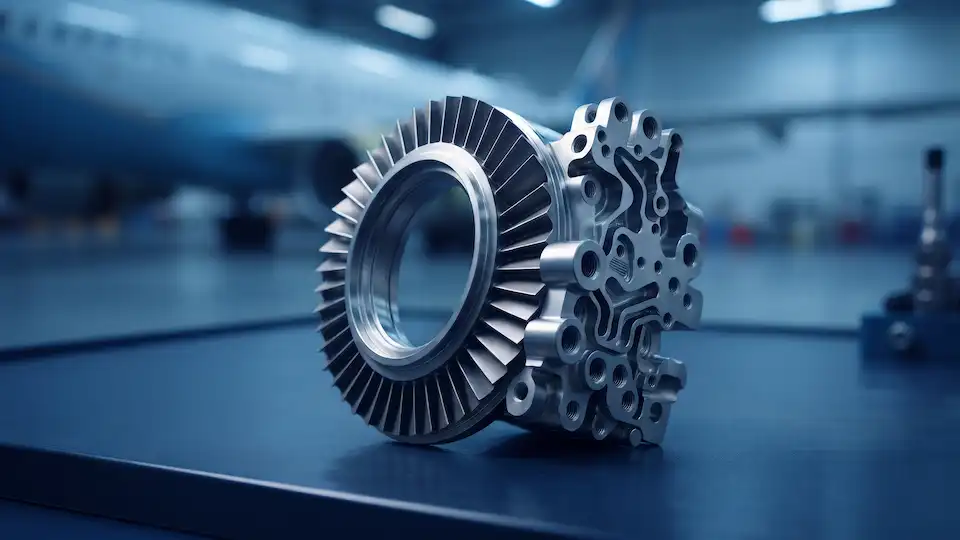
If you want to know what are PMA parts, they are aircraft components approved by the Federal Aviation Administration under Parts Manufacturer Approval to replace original equipment manufacturer items. PMA parts must prove identical or superior design, metallurgy, and safety standards through rigorous testing or licensing before entering civil aviation service.
For decades, original equipment manufacturers held near-monopolistic control over aftermarket spare parts. PMA introduced a strictly regulated third-party manufacturing pathway delivering identical quality at substantially reduced prices, saving commercial airlines millions annually.
Key Takeaways
- PMA parts are FAA-certified replacement components that must prove equal or superior safety and performance to OEM parts.
- Approval pathways include licensing agreements with TC holders, independent test and computation, and Supplemental Type Certificates (STCs).
- Cost savings of 30% to 60% stem from low overhead and avoiding aircraft development amortizations—not lower quality.
- Leasing return covenants frequently limit PMA usage to airline-owned airframes due to redelivery conditions.
What Exactly Is an FAA PMA Approval?
Parts Manufacturer Approval (PMA) is a combined design and production approval granted by the Federal Aviation Administration under 14 CFR Part 21 (Certification Procedures for Products and Articles). A company receiving PMA is legally authorized to manufacture and sell replacement aerospace components for civil aircraft.
An applicant must satisfy two distinct certification criteria: design approval confirming conformity to airworthiness standards, and production approval confirming a qualified Quality Management System capable of producing identical articles consistently.
Three Primary Approval Pathways for PMA Parts
FAA regulations establish three recognized routes for obtaining PMA approval:
- Licensing Agreement: The applicant holds a formal agreement with the original Type Certificate (TC) holder, utilizing OEM drawings, material specs, and tooling.
- Test and Computation: The applicant independently engineers the component, using comparative metallurgy, stress analysis, fatigue testing, and CFD to prove equal or superior performance to the FAA.
- PMA Supported by an STC: When a part introduces a major change in design or operating characteristics, the applicant first obtains a Supplemental Type Certificate (STC) before PMA production approval.
| Approval Pathway | Engineering Data Required | Regulatory Basis | Typical Components |
|---|---|---|---|
| Licensing Agreement | OEM drawings, approved tooling, process specs | 14 CFR 21.303 / TC Data | Structural fasteners, brackets, ducting |
| Test & Computation | Comparative stress analysis, metallurgy, CFD | 14 CFR 21.303 Independent | Brake disks, exhaust nozzles, valves |
| STC Route | Full flight test, system safety assessment | 14 CFR 21 Subpart E / STC | Avionics upgrades, hush kits, winglets |
Why Are PMA Parts 30% to 60% Cheaper than OEM?
The price difference between OEM and PMA components does not stem from inferior materials. Instead, it reflects divergent business models.
Airframe and engine manufacturers frequently market new aircraft at low margins, then mark up proprietary aftermarket spares by 300% to 1,000% to recover initial development costs. PMA manufacturers focus exclusively on high-demand, high-wear consumables (such as brake disks and turbine seals), allowing them to price certified parts 30% to 60% lower while remaining profitable.
How to Verify a PMA Part and Ensure Installation Eligibility
Technicians must verify that every replacement part is authentic and eligible before installation. FAA regulations require specific physical markings:
- FAA-PMA Marking: Permanently stamped, etched, or marked on shipping tags if the part is too small.
- Manufacturer Identity: The name or trademark of the PMA holder.
- Part Number: The distinct PMA part number.
- Installation Eligibility: Packaging or tags must specify the approved aircraft or engine series. Technicians verify this against the FAA PMA Supplement directory.
Aircraft Lessor Hurdles and EASA International Acceptance
Major airlines heavily utilize PMA parts across their owned fleets to save millions annually. However, operating leases present challenges: lessors often require 100% OEM parts upon lease return to maintain global remarketing flexibility.
Internationally, EASA accepts FAA PMA parts under the Bilateral Aviation Safety Agreement (BASA). Non-critical parts receive automatic reciprocal acceptance, while critical life-limited parts require direct validation. Understanding aircraft part conditions helps maintenance managers navigate these lease requirements.
Frequently Asked Questions
Are PMA parts as safe as OEM parts?
Yes. PMA parts undergo stringent FAA engineering evaluations and testing to prove they equal or exceed OEM safety, durability, and performance requirements before receiving certification.
How do I verify if a PMA part is eligible for my aircraft?
Check the FAA PMA Supplement database and accompanying documentation to confirm your specific aircraft make, model, and engine variant are listed under installation eligibility.
Does EASA accept FAA PMA parts in Europe?
Yes, under the EU-US Bilateral Aviation Safety Agreement (BASA). Non-critical PMA parts receive automatic reciprocal acceptance, while critical components may require direct EASA validation.
Why do aircraft lessors restrict PMA parts on leased planes?
Lessors fear that non-OEM parts could reduce secondary market liquidity or face regulatory friction with future international airline lessees during aircraft redelivery.